AI News Daily Briefing — February 14, 2026
Open-Source AI Models Storm the Leaderboards as Free Agentic Coding Goes Mainstream
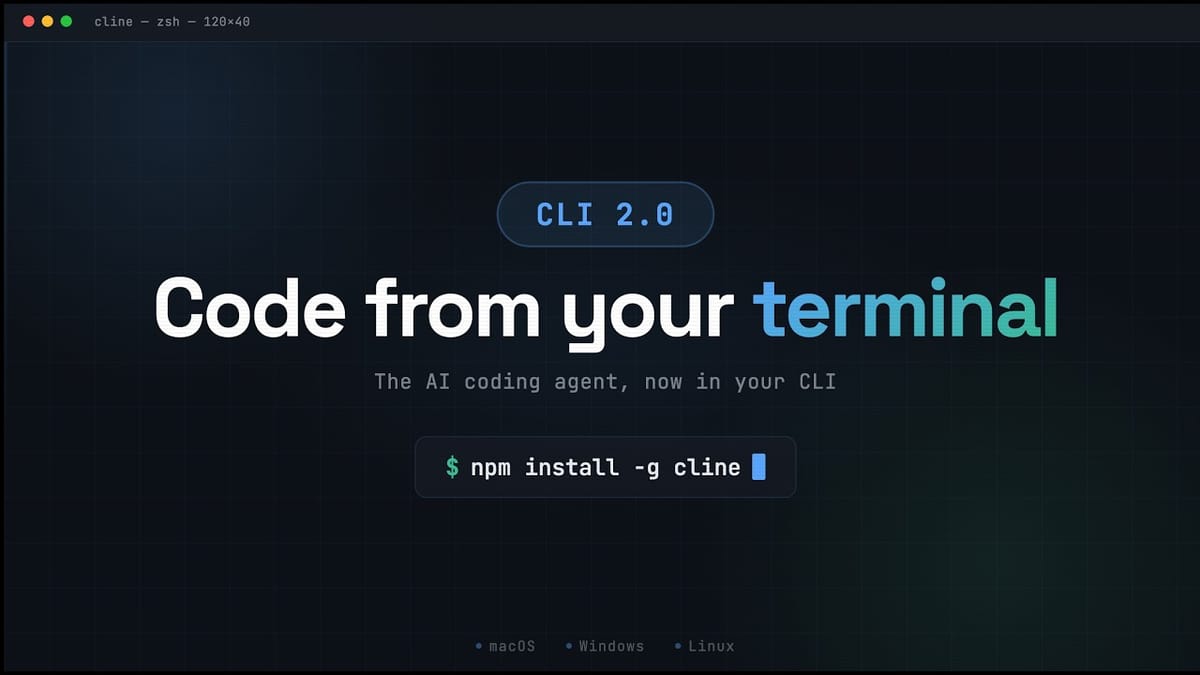
A convergence of releases this week is redrawing the competitive map between open and closed-source AI. Kimi K2, GLM-5, and MiniMax M2.5 are now claiming top-tier benchmark positions previously held exclusively by proprietary models from OpenAI and Anthropic. More importantly, these aren't just research curiosities — Cline's new CLI 2.0 coding agent ships with native support for Kimi K2.5 and MiniMax M2.5, meaning developers can now run agentic coding workflows at zero cost, no API key required.
This matters because it collapses the economic barrier that kept serious AI-assisted development tethered to paid platforms. When frontier-class models are both free and immediately usable in terminal-based coding agents, the value proposition of closed-source APIs shifts from raw capability to ecosystem, reliability, and enterprise support. Emad Mostaque called MiniMax's achievement a narrowing of the open-closed gap; the reality is more disruptive than that — for many developer workflows, the gap may have already closed.
Builders should pay attention to the second-order effects. If agentic coding becomes a commodity, the moats move to tooling integration, context management, and workflow orchestration. Cline shipping interactive modes in a terminal agent, and Replit adding direct user feedback loops to its agent, are early signs that the competitive frontier is shifting from model quality to developer experience around the model.
Google Releases Gemini Skills Framework for Agent Developers
A new GitHub repo provides a structured skills interface for the Gemini API, giving developers a standardized way to build model-agent interactions. This is Google's bid to become the default plumbing for agent orchestration — think of it as an SDK for composable AI capabilities.
Manus AI Ships Always-On Agent with Subagents and Memory
Manus AI's new autonomous agent can spawn subagents, retain memory across sessions, and support messaging — moving beyond one-shot task completion toward persistent digital workers. The always-on framing signals the industry's shift from chat-based AI to background-running agents.
Anthropic's Super Bowl Ads Push Claude into Top 10 App Downloads
Claude cracked the top 10 on the back of Super Bowl commercials and the Opus 4.6 release, proving that mainstream consumer awareness for AI assistants is still very much up for grabs. The fact that ads mocking AI hype drove downloads is its own kind of irony.
Google DeepMind Showcases Project Genie Interactive World Builder
Project Genie generates playable interactive worlds from AI, now available to U.S. AI Ultra subscribers through Google Labs. Generative game environments remain a fascinating capability in search of a killer use case — but DeepMind is clearly investing in making it consumer-facing.
AssemblyAI Ships First Prompt-Steerable Transcription Model
Universal 3 Pro lets you prompt your transcription model — tell it what to focus on, how to format output, or what domain terms to expect. This is a meaningful shift from static speech-to-text to configurable audio processing pipelines.
Mass Exodus at xAI Raises Questions About Musk's AI Venture
Multiple departures from xAI point to internal tensions beyond typical startup churn. With Grok competing in an increasingly crowded field and open-source models closing the gap, talent retention becomes existential.
Replit Agent Adds Direct Bug Reporting from Users
Replit now lets end users send bugs and feedback directly to the AI agent that built their app, closing the loop between deployment and iteration. It's a small feature with big implications — agents that can receive and act on user complaints start to look like autonomous product teams.
Supabase Reverts Network Config After US-East-2 Outage
An internal networking configuration change caused a service incident for Supabase's US-East-2 region. The team identified and reverted the issue — a reminder that even managed backend services have blast radius risks developers should plan for.
India Partners with Alibaba.com for Export Push Despite Past Bans
India is leveraging Alibaba's B2B network of 50M buyers across 200 countries to boost exports — a pragmatic reversal from its previous stance of banning Chinese tech platforms. Geopolitics bending to economic gravity.
AMD and TCS Partner to Push Instinct and EPYC Chips Into Enterprise AI
AMD taps Tata Consultancy Services' enterprise reach to get its AI accelerators into more corporate deployments. With Nvidia supply still constrained, AMD's channel strategy is looking increasingly smart.
Waymo Enlists DoorDash Drivers to Close Robotaxi Doors
When passengers leave Waymo doors open, the cars get stuck — so the company is paying gig workers to shut them. A perfect symbol of the messy human-machine interface problems that persist even in cutting-edge autonomy.
The theme of this Valentine's Day briefing is unmistakable: open-source AI models have reached a tipping point where they're not just competitive but practically deployable in production coding workflows at zero cost. When Cline ships a terminal agent backed by free frontier models, and Google responds by open-sourcing agent skills frameworks, the competitive moat is no longer model quality — it's the tooling, memory, and feedback loops wrapped around the model. Builders who are still waiting for permission to adopt agentic workflows just ran out of excuses.